


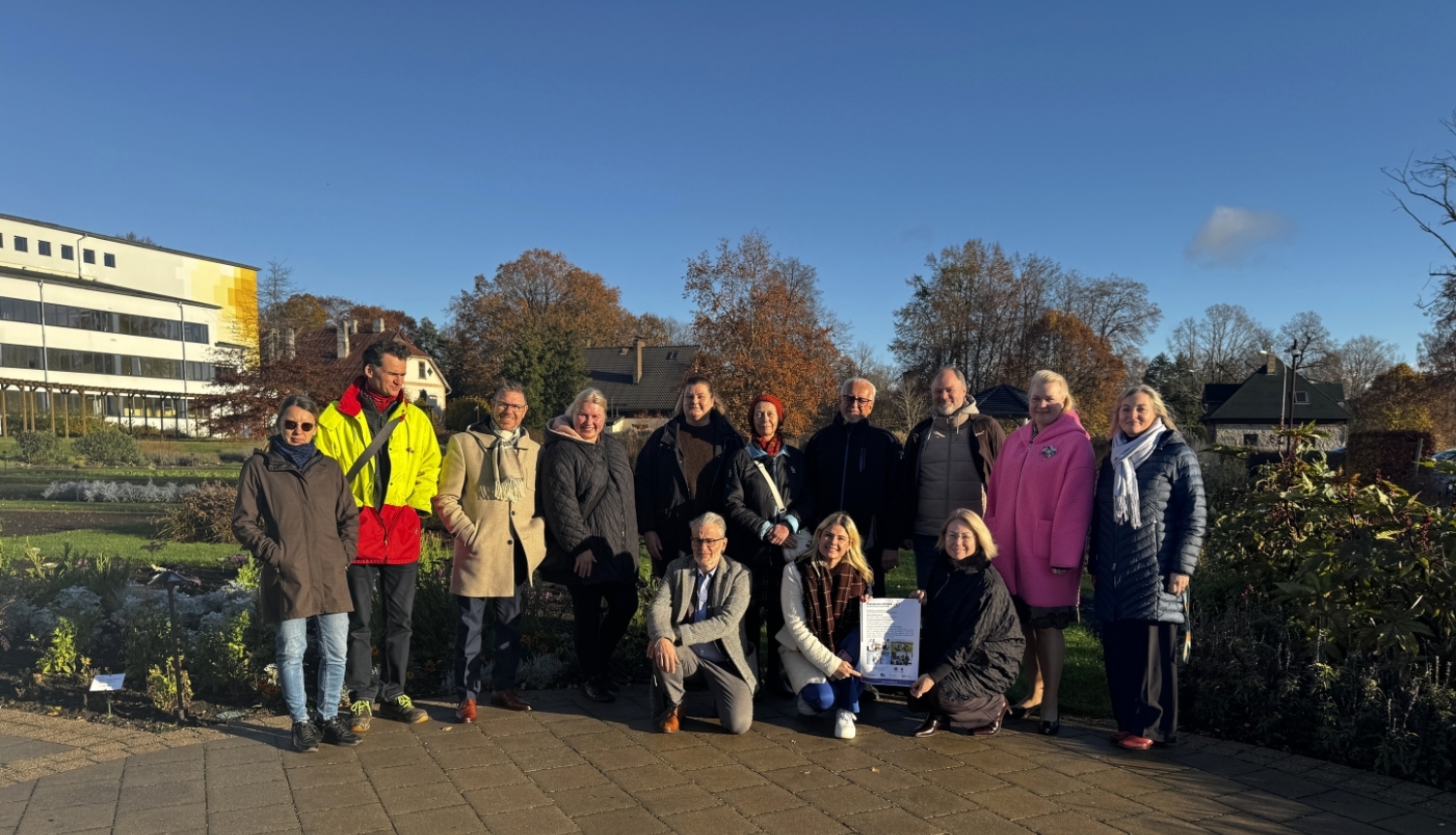
From 3 to 6 November, representatives of the Swiss organisation Hotel & Gastro formation Schweiz, Mike Kuhn and Karl Marbet, visited Latvia to learn about cooperation between vocational education institutions and companies, discuss opportunities for introducing elements of the Swiss dual vocational education and training (VET) model, and explore future areas of cooperation. The visit took place as part of the Swiss–Latvian Cooperation Programme project “Development of Industry-Based Vocational Education”.
During the four-day visit, the Swiss experts met with representatives of the energy, agriculture, mechanical engineering and hospitality sectors, and visited vocational education institutions and companies.
The experts visited Bulduri Technical School and Riga Technical School of Tourism and Creative Industry, where they explored the training facilities, the organisation of practical training and cooperation with industry partners. Discussions with representatives of educational institutions and industry organisations provided an opportunity to explore ways of strengthening employer involvement in the delivery of vocational education and training.
At the Energy Competence and Innovation Centre (EKIC) of AS Sadales tīkls, the experts learned about the company's training facilities and discussed practical training opportunities, the benefits of employer involvement in vocational education, and the piloting of an industry examination centre approach in Latvia with representatives of the energy sector.
EKIC brings together the training and professional development of energy sector specialists with innovation, closely linking education to practical work in the industry. Building on more than 40 years of experience in developing professional competencies, the centre cooperates with vocational education institutions, higher education institutions and energy sector companies. During the visit, this experience provided a valuable basis for discussions on strengthening employer involvement in vocational education.
“The greatest value of the Swiss partners’ visit was the opportunity to discuss how vocational education and training can be more closely aligned with the actual needs of the energy sector. It is essential that future specialists become familiar with modern technologies and acquire safe working practices during their studies. The Energy Competence and Innovation Centre can make a significant contribution to this process by providing practical training facilities and access to the expertise of industry professionals. Switzerland’s experience also provides a valuable foundation for developing an approach to industry examination centres that is suited to Latvia’s circumstances and for establishing a shared understanding of professional qualification requirements. Going forward, it will be important to translate the insights gained into concrete solutions that improve young people’s readiness for employment and encourage greater employer involvement in vocational education,” said Artūrs Šmats, Director of the Energy Competence and Innovation Centre.
During meetings with representatives of the mechanical engineering sector, discussions focused on the advantages of the Swiss dual VET model, the conditions required for employer participation and the challenges that need to be addressed to introduce this approach more widely in Latvia.
Latvian mechanical engineering companies emphasised that vocational skills are best acquired in a workplace, alongside experienced professionals and using the latest technologies. This is precisely the opportunity offered by the Swiss dual education model. Young people undertaking practical training at Green Motors shared this view, expressing a preference for company-based training, where they could receive individual support and gain more hands-on experience.
At the same time, industry representatives stressed that changes must begin during the project’s implementation. To ensure that the new model remains effective after the project concludes, agreements on its organisation, financing and participation requirements must be reached in good time. This will require coordinated action by employers, educational institutions and public authorities.
According to the Agricultural and Industrial Machinery Association and the Automotive Association, the success of the project will be measured not by the number of activities implemented, but by the tangible and lasting changes it brings to vocational education and training in Latvia.
As part of the visit, the Swiss experts also visited hospitality businesses, including the restaurants House of Light, Italissimo and LIDO. Discussions focused on employer involvement in vocational education, opportunities for practical training and cooperation with educational institutions.
The visit provided an opportunity for Latvian educational institutions, companies and industry associations to jointly assess opportunities for developing vocational education and training, drawing on Swiss experience. The insights gained and recommendations from the Swiss partners will inform the continued development and piloting of an industry-based vocational education model tailored to the needs of Latvia’s labour market.
For more information about the Swiss–Latvian Cooperation Programme, please visit: https://swiss-contribution.lv